Monday, 20 March 2017

Polish Film Posters

Research:
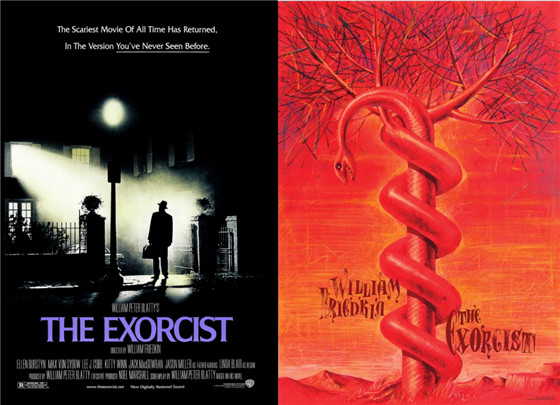
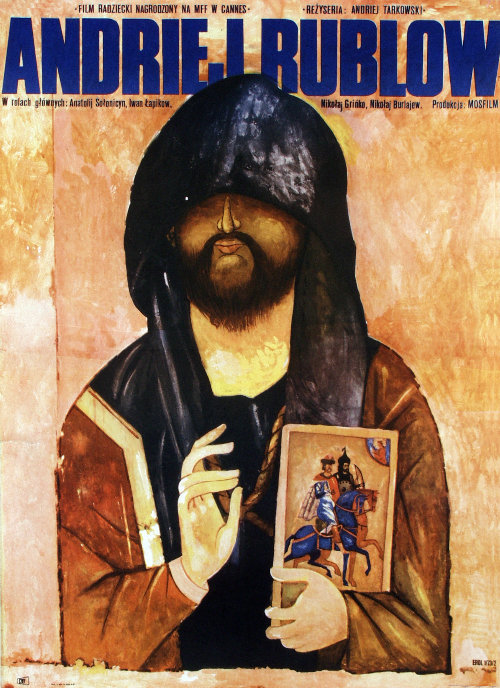
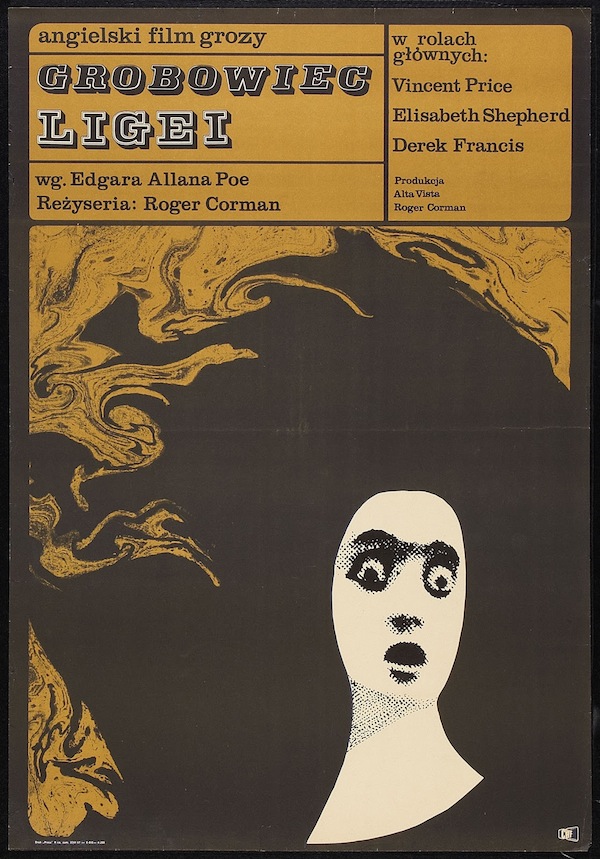
  • The Polish film poster is artist-driven, not studio-driven. It is more akin to fine art than commercial art. It is painterly rather than graphic. What sets the Polish poster apart from what we’re used to see in the West is a general disregard for the demands of the big studios. The artists requested and received complete artistic freedom and created powerful imagery inspired by the movies without actually showing them: no star headshots, no movie stills, no necessary direct connection to the title.
  • They are in this regard similar to the work of Saul Bass, a rare example of a Hollywood artist who enjoyed total freedom from the studios. Next to a typical Hollywood film poster with the giant headshots of the latest movie star and the title set in, you guessed it, Trajan Pro, the Polish film poster still looks fresh and inspiring today.
  • In the Cold War era the vitality of the Polish Poster School attracted international attention and admiration. Although state controlled, the posters—which are characterized by sophisticated imagery and surreal tendencies—often carried powerful, oblique commentaries on the designers’ political surroundings.
  • Beginning in the 1950s and through the 1980s, the Polish School of Posters combined the aesthetics of painting with the succinctness and simple metaphor of the poster. It developed characteristics such as painterly gesture, linear quality, and vibrant colors, as well as a sense of individual personality, humor, and fantasy. It was in this way that the Polish poster was able to make the distinction between designer and artist less apparent.
  • Posters of the Polish Poster School significantly influenced the international development of graphic design in poster art. Their major contribution is in their use of the power of suggestion through clever allusions. Using strong and vivid colors from folk art, they combine printed slogans, often hand-lettered, with popular symbols, to create a concise inventive metaphor. As a hybrid of words and images, these posters created a certain aesthetic tension.
  • In addition to aesthetic aspects, these posters were able to reveal the artist's emotional involvement with the subject. They did not solely exist as an objective presentation, rather they were also the artist's interpretation and commentary on the subject and on society.


Thursday, 9 March 2017

Article Review


Empire: £4.50

Blockbuster main reviews and topic
Adverts based on blockbusters
Large picture covers (covering some whole pages)
Less academic (easy to read)
Smaller reviews on new art-house films
Discussion about the film and its characters, less about production
Entertainment

Sight and Sound: £3.75

Educated
Academic
Art-House
Specialised
Classic archive
Foreign film
Events
Adverts (old film, Curzon cinema)
Small reviews on blockbusters
Main reviews on art-house
Mainly writing in columns
Small pictures
Reviews on social context, political angle, cinematic techniques, directors style and technique, production of the film
Detailed complex vocabulary
Educational
Register i.e language, demographic (who its aimed at), complexity of the language


Sight and Sound magazine would suite my film best because of its touch on social context which is important to my film set in Poland. This magazine also mainly review and discuss foreign films of any kind and any time. Many films are compared to old films respecting many directors styles and cultures. The article I had chosen to reference in composition and style of writing is the Sight and Sound article on Agnieszka Holland. The journalist talked about Holland's life and upbringing in communist Poland, she included other Polish directors and the history of Poland's political issues that influenced many Polish films during a specific era.

My review would cover on the environment that show a true image of Polish culture in a small town. And because my film is an art-house film inspired visually by directors such as Tarkovsky, Coppola and Pawlikowski, the review would heavily touch on film form and rituals.


Sunday, 19 February 2017

Film Posters

- Poster analysis
1. Copy what wording is used and what is suggested
2. Colour what does it suggest, why chosen? Does it link to genre?
3. Cinematography what camera shot has been used and why? Audience positioning?
4. Layout (composition) framing of different elements (importance)
5. Imagery
6. Tag line what the film is all about


The poster is a black and white picture with a red font to the wording that is highlighted. For example, the title, the date the film is released, the five stars the film has been given, the film festivals and awards the film has won. The rest of the wording is information in a black font against the white background snow. The picture is a scene from the film but it also represents the entire film and its narrative. The shot is positioned to fit in the main character on the right side in the foreground whilst there is a view of the background showing location and a little about the narrative. The building is a convent suggested by what Ida is wearing, a nuns uniform. The trail that Ida leaves and is following represents her journey she makes, that is the main structure of the narrative. The fact that no one is behind her and that she is leaving at winter time in thick snow, seems unwelcoming from the convent and portrays a bleak life as a lonely person. She looks like a child in the poster by the shape of her compared to the shape of a woman and it almost seems strange to see such a young woman dressed as a nun or to even become a nun. So these suggestions add up to the journey and maybe questioning her religion. As the picture is black and white, enhancing the non existent colours and by the style of clothing and environment, the film is set in the past communist time of Poland.


This poster is another shot from the film in landscape representing the narrative of the film. The only difference is the title colourisation in black, this may have been done so that the words don't overpower the imagery that is important to the film. As Pawlikowski said "The film I was after would be made of strong graphic images and sounds. It would work through suggestion rather than explanation.".


These two film posters are from biography documentary films, although they are documentaries about iconic people for a worldwide audience I still wanted to search the layout of a biography poster. The two are very similar but also have slight similarities to Ida. The colours used are white, black and red which create a sophisticated respectful poster for a simple biography. However, Ida uses the colours in a different way that creates more of a bleak look depicting to the bleak and controversial narrative towards religion and Poland's history.

Ida would be the better poster to take inspiration from because a narrative is shown surrounding the main character as the audience do not know who Ida is yet. For the biography documentary posters, an iconic face is all that is needed which doesn't apply to my film.

Monday, 6 February 2017

Narrative Theories

LEVI STRAUSS


http://www.englishbiz.co.uk/extras/binaryopposition.htm
  • Binary opposition is a theory of how we attribute meaning to things. These theorists came to be called "Structuralists" because they proposed that meaning is developed within mental structures that require "opposites" in order to create meaning.


  •  The method offers a way to explain how the many deep-seated beliefs in our society called dominant ideologies exist and continue to exist - and to show how texts work to reinforce and maintain a particular world-view or mind-set, one that can be argued supports and maintains the traditional power structures of society.


  • Structuralist thinkers recognised that the meaning we create from the language we use is not at all straightforward and has important implications for society as a whole. The meaning of many words is created by a subconscious awareness of a 'culturally opposing’ idea – a binary opposite. The important aspect of this is that one half of each binary is dominant or favoured.


  • The effect of these binary oppositions or pairs can be argued to help create and reinforce the norms of thinking in our society - and language is at the heart of how these ideas are maintained. The ways in which our thought processes rely upon binary opposites helps to explain how difficult it is to shift from, for example, the ‘male is norm’ aspect of modern patriarchal society. Other common binaries are ‘youth’ / ‘age’, ‘health’ / ‘disease’; ‘dirty’ / ‘clean’  - but there are thousands. These cultural ‘norms’ are deep-seated ideas that are more properly called society’s prevailing or dominant ideologies.


ROLAND BARTHES


The hermeneutic code (HER.) refers to any element in a story that is not explained and, therefore, exists as an enigma for the reader, raising questions that demand explication.


The proairetic code (ACT.) refers to the other major structuring principle that builds interest or suspense on the part of a reader or viewer. The proairetic code applies to any action that implies a further narrative action. For example, a gunslinger draws his gun on an adversary and we wonder what the resolution of this action will be. We wait to see if he kills his opponent or is wounded himself. Suspense is thus created by action rather than by a reader's or a viewer's wish to have mysteries explained.


The semantic code (SEM.) points to any element in a text that suggests a particular, often additional meaning by way of connotation.


The symbolic code (SYM.) can be difficult to distinguish from the semantic code and Barthes is not always clear on the distinction between these two codes; the easiest way to think of the symbolic code is as a "deeper" structural principle that organizes semantic meanings, usually by way of antitheses or by way of mediations (particularly, forbiddend mediations) between antithetical terms.


The cultural code (REF.) designates any element in a narrative that refers "to a science or a body of knowledge". In other words, the cultural codes tend to point to our shared knowledge about the way the world works, including properties that we can designate as "physical, physiological, medical, psychological, literary, historical, etc.". The "gnomic" code is one of the cultural codes and refers to those cultural codes that are tied to clichés, proverbs, or popular sayings of various sorts.


TZVETAN TODOROV


Tzvetan Todorov's narrative theory suggests that all narratives follow a three part structure where they begin with equilibrium, where everything is balanced, progress as something comes along to disrupt that equilibrium, and finally reach a resolution, when equilibrium is restored.


SEYMOUR CHATMAN