Showing posts with label Creativity. Show all posts

Friday, 21 April 2017

Poster Designs

For the poster I wanted to use old film posters as a way of representing the themes of childhood and memories. I looked through some old film pictures I hadn't taken in the areas in which I filmed in however, the posters didn't have such a link to the film. 


 I had also picked out some screenshots from the film and experimented with a title but it didn't suggest the same way I perceive the film to be nor have the style of a Tarkovsky film or Polish film poster would have.


During filming I had taken photographs on my own film camera.


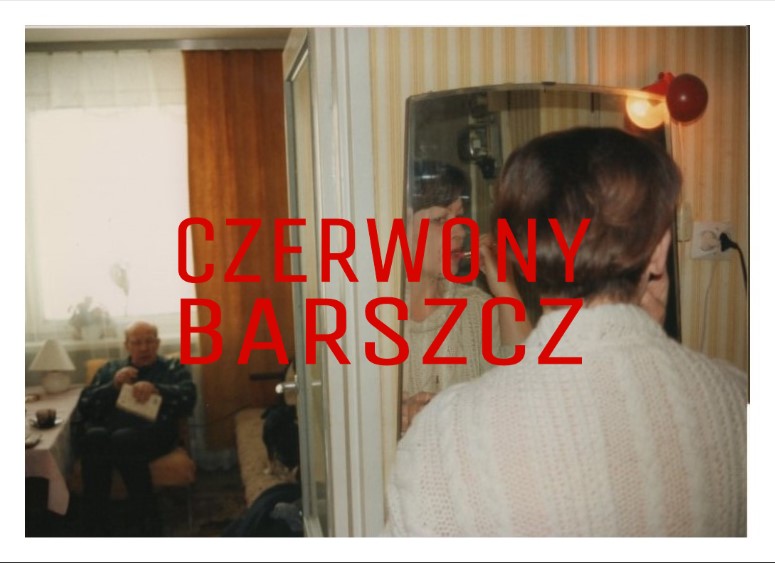
 I tried to take pictures that captured Poland and how I see Poland with the stories Marta told. Specifically the environment, her home, the graveyard, religion, including things that haven't changed (the bath placed outside the graveyard, the communist blocks, the interior of her home). Also the colours that come out in film photographs match the films colourisation


 I experimented with a range of typography in the colours white, red and black. What I settled on was the font from Tarkovsky's film Nostalgia, as it has the same name I thought the font looked perfect with the word and would stylistically match with Poland in the background.

 I favoured the interior picture because it is how I personally depict Poland and my grandmother. But there isn't any scenes in the film that include this room so I could not use this picture.

This layout could be used as a DVD cover or even a magazine spread as advertising that they show in such as Empire.

 I settled on the graveyard pictures and experimented with the white, red and black. The reason I did that is because Pawlikovski's Ida had a red title that I thought really enhanced the narrative and what that film meant. It also had similarities to my own film.
 This is a poster design of the graveyard, it has a very painterly structure as well as a subtle darkness from the field of graves and crossed contracting to the white snow and sky. But this structure is something of what a Polish film poster would include, enhancing the themes in the film.  But what I particularly like is the cross stood underneath the letter N with a small classic Polish looking wooden house in the distance. It symbolises the memories from Marta including a Polish culture in a different perspective and what many Polish people can relate to.


Monday, 6 February 2017

CZERWONY BARSZCZ


From a list of voice recordings I made during the week I was in Szydlowiec with my grandmother. This voice recording was the one that stood out to me the most and I what I personally found my favourite. Although the story is generally sad, there are parts that are comical creating a bitter sweetness that I am very fond of.
My original plan was to remake the voice recording with my mother to make the Polish clearer as well as not have any background noise. However, I tried a sample editing footage with the original voice recording and I thought it wouldn't be the same if I had remade it. My grandmother speaks a very primitive Polish however has a way of telling her stories, which is what saved the original voice recording.
The background noise is from the television. As a child I watched Reksio, a Polish children's cartoon programme, so my grandmother left it on for me whilst talking about her childhood.


The footage begins with the main square of Szydlowiec of the tower playing bells. Along with an old woman walking into the square. The footage then goes on to observe the traditional houses of Szydlowiec with dogs guarding at the gates. But if anything they were the most gentle dogs that would just stare and be happy to be stroked. I wanted to include the dog in the snow outside the house because I thought it was a nice representation of the story to come. A lonely dog in the snow with a warm house just next to it. Another small dog barking outside eventually sneaking back under the gate. My grandmother left with her sister whilst her father is away leaving her nothing. She tries to make a nice Sunday lunch but her sister would rather beg to her neighbours for a better food. The only thing my grandmother wanted was her mother who made a meal and a warm home.
The next scene is in my grandmothers flat with curlers in her hair watching the television (Reksio). There is then a sequence of her in the kitchen sharpening a knife and cutting a fish (Carp).
I included these scenes because I wanted to show a traditional routine in Poland during the winter time. But it also included my grandmothers routine as a widow living alone.
I had asked her the previous day to go to the graveyard which she agreed on as she hadn't been there in a while. So I filmed during the walk there as well as her routine in the graveyard.
There is around 30 minutes of footage I had taken in the graveyard that I had to pick from. So I picked the few that made a mini narrative of simply lighting up the candles with a small prayer at the end. I wasn't sure whether to translate the ending of the prayer but I decided to translate the only part you could hear because its almost an intrusion into her present life even though it had nothing to do with the story of the past.
The most noticeable editing was with the music. My grandmother asked me a question and it didn't sound right with music playing on top. So I edited the music to play as she tried to light a match but stopped as soon as it was noticeably not lit until she tried again. The music would then play when the match had finally lit until the moment she closes the lid of a candle lantern and asks me a question. She then finally places the candle into the other lantern putting the lid into place which then continues the music once again.


Monday, 16 January 2017

To Ostatnia Niedziela


To Ostatnia Niedziela from Media 12345 on Vimeo.

This is an experimental clip using a section of footage of my grandmother walking to the cemetery. I layered the footage with a conversation I had recorded between the two of us, I had asked her if she loved Mieczyslaw Żytnicki (my grandfather) and she had replied "No". So I asked if there was anyone she had ever loved and so on...(the conversation in the clip).
The television was on in the background and I personally don't like the sound so I recorded the beginning of my grandmothers favourite, Mieczyslaw Fogg's song 'Ostatnia Niedziela'. To ostatnia niedziela (Polish: This is the Last Sunday; 1935) is one of the long-time hits of Jerzy Petersburski. A nostalgic tango with lyrics by Zenon Friedwald describing the final meeting of former lovers just before they break up, it was performed by numerous artists and gained the nickname of Suicide Tango, due to its brooding lyrical content.
Although an exaggerated link, I think its the only suitable genre and time of music that fits with the theme of my documentary film. As well as Fogg being my grandmothers favourite.
I recorded the beginning to make it sound as if it was coincidently playing during the conversation as well as drowning out the sound of the television. I then added the official song to the film when the conversation ended, following her walk to the cemetery including slow footage of the surrounding nature. What I also noticed and liked was the fact that she kept on turning around unsure on what I was doing (I didn't tell her that I was making a film).

Tuesday, 27 December 2016

Paweł Pawlikowski Edit

"The film I was after would be made of strong graphic images and sounds. It would work through suggestion rather than explanation. It would mainly consist of self-contained scenes, done from one angle, in one continuous take, with no informational dialogue, no functional shots, no plot devices or any of the usual tricks cinema uses to suggest or elicit emotion. A film in which form, emotion, idea would be one."

" I was more convinced the story could tell itself without coverage and exposition. It was enough to put strong moments in strong shots, side by side, and leave things to the imagination. The film would work as a meditation as much as a story. The key was to choose one angle, the most effective shot, and then to work and rework all the elements: framing, light, dialogue, movement, gesture. Adding, taking away, refining from take to take, until the thing had the right life and rhythm. This meant forgetting the script and treating each scene and each shot as a thing in its own right."


CMENTARZ from Media 12345 on Vimeo.
This is some experimental editing and filming during a visit to the graveyard in Szydlowiec. I created the sequence in the style of Pawlikowski's film Ida, the framing, Polish culture, religious character and suggestive narrative. The film focuses on identity which is one of the key themes in my short film. The song I included is sung by a Polish man (Paweł Prokopieni) in the late 1930s but is singing a Russian song (Веровочка), this is because my grandmother is a fan of his music.

Tuesday, 4 October 2016

Short Film Ideas

Locations:
The location will be in Poland. In a small town Szydlowiec. The main locations in Szydlowiec will be around the blocks of communist flats, the inside of one of the flats, the view from the flat windows, the park, the lake, the streets, the cemetery and the church.


Characters:
The characters will be real local people in the town, the main character being my grandmother (Marta Zytnicka) who lives in the flat. No one will know that I am filming them because I want everything to be authentic.


Narrative:
Narrative will be a based around the environment and following my grandmother around her everyday life with pieces of locations that fit into the scene for example an outside piece of footage cutting into another. The type of narrative will be driven by the aesthetic of Coppola by a documentary-style and way of showing the narrative rather than tell it/narrate it. Tarkovsky has a very similar way however with uses of long takes in still images or panning movements.


Themes:
The themes will be inspired by directors Andrei Tarkovsky and Sofia Coppola. Themes of childhood, innocence, memories, dreams, nostalgia and remoteness. This will be translated through the cinematography.

The Virgin Suicides by Sofia Coppola:
Inspiration on opening and closing the short film


For my opening I have similar ideas, however a different stage in life, the identity of a lonely woman, from an older generation, in Poland. The way Coppola opens the film is the way I would like to introduce the environment and its neighbourhood. A first impression focusing on its main theme within the shots.
The film also opens with a narrator talking of his memories about the family, which is another idea in consideration for my film to open with. Talking in past tense however presented in the present would be the only difference. Footage would have a link to what the narrator would be saying as a reflection rather than acting as the real memory. Because my grandmother does not speak English and only Polish, I also have to take in consideration ideas for subtitles.
I was thinking about having shots of a routine including pieces of the environment cutting into it to establish the films location. The routine will be of either starting the day or dealing with the graveyard or whatever is a repeating process within the environment. Local people going to church, grandparents sitting outside, children playing, teenagers in hang out places and most importantly memories. The memories (inspired by Tarkovsky) are important because they are the main theme to the narrative.
This overall short film will be documentary-style, due to its dependence on the main character to make a narrative.

Poland Coppola Edit


The images taken are either from the summer or winter time. And I wanted for that to be noticed. Playing around with the warm and cold effects again I think these shots worked with that a lot better, specifically because they are outside with natural light or indoor with only natural light. The tones were easy to pick because most of the photographs already had its colour palette blended together by the natural light, nothing was in contrast with an object opposing to the colour themes.
The images of children playing outside with the grandparents watching was a lucky shot, nothing was set up, because everything was natural and genuine. It links to Coppola's Virgin Suicides, the girls playing/sunbathing outside became very natural with sunlight hovering over them. Although they are a different age to these children, they still obtain the theme of innocence, immaturity and youthfulness in their own way. Personality sinks through to the audience where they are able to comprehend by the detail the characters make, with things you wouldn't think to order when making a film.
This again fits into the ideology of memories carried out in Tarkovsky's films. Pieces of memory can be related through a shot by an action of detail or mis-en-scene. Especially with youthfulness, everyone can relate somehow with another's childhood.
The winter shots have specified tones of blues and pinks, although pink has more of a warmth I wanted the warmth to be like the left overs of summer, a sense of nostalgia. The cool blues are to represent the present time of winter. I did this by enhancing the warm temperatures first as the past tense, like I did with the summer shots, to then enhance cooler tones as a layer of the presence. Coppola's Virgin Suicides also have contrasting effects from summer warmth to bleak tones of nostalgia turning into a dark winter. For example, one of the characters (Lux) downwards spiral into winter time is reflected with constant crisp blue sceneries after her last night of summer at prom. She wakes up left alone by her partner in a football field with a close up shot, eventually expanding in the establishing shot positioning her at the bottom of the screen in pure ice blues. The grass is turning grey as summer descends and the audience is left with a sharp breeze of Lux's innocence vanish.
This colour psychology creates a narrative of childhood, nostalgia and memories.